If you’ve ever Googled “how to get rid of SIBO” and found yourself spiraling into low-FODMAP lists, antimicrobial protocols, and endless supplement stacks, you’re not alone. SIBO can feel like this mysterious, frustrating diagnosis that keeps coming back no matter what you try.
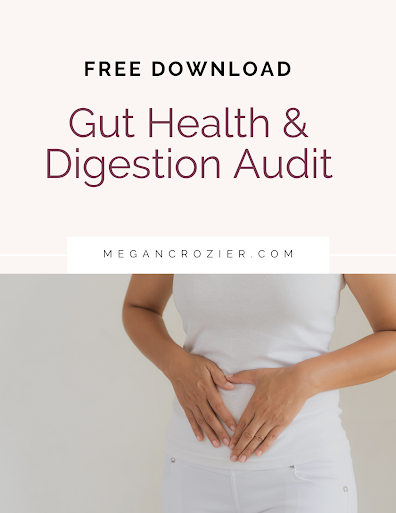
Before we dive in, if you’re here because you’re dealing with bloating, food reactions, or gut issues that just won’t budge, I created a free resource to help you get clarity on where to start: The Gut Audit — grab it here.
But here’s what most people aren’t talking about…
SIBO isn’t the root cause—it’s a symptom.
And if you’ve been trying to “get rid of it” for months (or years), what you probably need isn’t more restriction—but more clarity around what’s driving it in the first place.
What Is SIBO?
SIBO stands for Small Intestinal Bacterial Overgrowth. It happens when bacteria that should live in the large intestine overgrow in the small intestine—where they don’t belong.
This can lead to symptoms like:
- Chronic bloating (especially worse as the day goes on)
- Gas, burping, or reflux
- Constipation or loose stools
- Brain fog or fatigue after eating
- Discomfort after eating garlic, onions, legumes, or high-fiber foods
If you feel like no matter what you eat, you’re bloated—and your list of “safe” foods keeps getting shorter—SIBO might be part of the picture.
But here’s the thing: SIBO doesn’t happen randomly. There’s always a reason the bacteria are overgrowing.
SIBO and Chronic Conditions: What the Research Shows
SIBO often doesn’t show up in isolation—it tends to coexist with other chronic health issues. Here are some lesser-known but important connections:
SIBO and Hashimoto’s
Research suggests that more than 50% of people with hypothyroidism or Hashimoto’s also test positive for SIBO. That’s because low thyroid function slows gut motility, making it easier for bacteria to overgrow in the small intestine.
SIBO and Endometriosis
Women with endometriosis are significantly more likely to struggle with gut issues, especially constipation, bloating, and gas. SIBO may play a role due to chronic inflammation, pelvic floor dysfunction, and surgical scar tissue that disrupts digestion and motility.
SIBO and IBS
One study found that up to 84% of people diagnosed with IBS actually test positive for SIBO. In many cases, IBS is a symptom of deeper digestive dysfunction—not a standalone diagnosis.
If you’ve been told you have “IBS” or have a history of thyroid or hormonal conditions like endometriosis, SIBO might be a missing piece of the puzzle.
Why the Conventional Approach Often Fails
The typical treatment for SIBO includes:
- Antibiotics (like rifaximin)
- A strict low-FODMAP or elemental diet
While this might provide temporary relief, many people find themselves back in the same cycle within months—still bloated, still restricted, still searching for answers.
That’s because these approaches often ignore the root cause. They focus on killing bacteria without asking why the bacteria are overgrowing in the first place.
Why SIBO Keeps Coming Back
SIBO often recurs because the environment in the gut hasn’t been properly rebuilt.
Here are some common underlying issues that allow SIBO to develop or persist:
Nervous System Dysregulation
Chronic stress or a dysregulated nervous system can impair motility and gut function.
Low Stomach Acid and Enzymes
Without enough digestive juices, food ferments and bacteria can thrive in the wrong areas.
Sluggish Motility or Constipation
When things aren’t moving, bacteria hang around longer than they should.
History of Antibiotics, Food Poisoning, or Medications
These can all shift the gut microbiome and set the stage for overgrowth.
Mineral Imbalances and Hormonal Issues
Imbalances in minerals like sodium or zinc, along with low thyroid or cortisol dysfunction, can slow digestion and impair gut function.
A Real Client Example
One of my clients came to me after being diagnosed with SIBO by her doctor. She had already completed multiple rounds of antibiotics and was following a very restricted low-FODMAP diet. But she was still dealing with:
- Alternating constipation and diarrhea
- Smelly gas
- Bloating that only seemed to be getting worse
She felt frustrated, depleted, and confused.
👉 (Curious what it would look like to finally break out of this cycle and actually rebuild your gut for good? Click here to apply to work together.)
Instead of jumping into another antimicrobial protocol, we took a step back and ran labs to uncover the why.
Her results showed:
- Poor bile flow
- Low stomach acid and enzyme production
- Low sodium and zinc
- Low beneficial gut bacteria
- Sluggish thyroid function
This was the missing piece. Her digestive system wasn’t set up to properly break down food or move it through efficiently—which created the perfect conditions for overgrowth.
Once we focused on restoring digestive function and addressing those foundational issues, her symptoms began to shift. And unlike past treatments, this progress stuck.
What We Do Instead
With clients, we focus on rebuilding gut function and identifying the root cause of symptoms like SIBO. Here’s what that looks like:
1. Support the Nervous System
Stress directly impacts digestion. We use tools that regulate the gut-brain connection and help shift the body into a more parasympathetic (rest and digest) state.
2. Strengthen Digestive Function
This includes supporting stomach acid, bile flow, and digestive enzymes—so food gets properly broken down and bacterial overgrowth doesn’t continue to feed on undigested particles.
3. Support Motility and the Migrating Motor Complex (MMC)
The MMC is your gut’s “cleaning wave” between meals. We focus on lifestyle strategies, meal timing, and sometimes targeted supplements to keep things moving.
4. Support Hormones
Thyroid and cortisol play a huge role in digestive function. We address sluggish thyroid function and stress-driven cortisol imbalances that may be slowing down gut motility and enzyme production.
5. Rebalance Minerals
Foundational minerals like sodium, potassium, and zinc are critical for enzyme production, stomach acid, and cellular energy. We assess and support these based on lab data.
6. Use Functional Testing
Rather than guessing, we use tools like the GI Map, HTMA, and blood labs to get clear on what’s going on internally and build a personalized plan.
7. Focus on Nourishment Over Restriction
Instead of continuing to eliminate more foods, we focus on restoring what’s missing—so your body can digest and tolerate food again.
Could SIBO Be Driving Your Symptoms?
Here are some signs that SIBO might be part of the picture:
- You get more bloated as the day goes on
- You feel like you react to everything you eat
- You don’t tolerate onions, garlic, legumes, or fiber-rich foods
- You struggle with constipation, reflux, or unpredictable stools
- You’ve tried elimination diets or probiotics, but nothing seems to help long term
If that sounds like you—this is exactly what I help my clients figure out and move through.
Want to Learn More?
✔️ You can start by tuning into my free private podcast The Fueled Female: Hormone Health Essentials where I break down how gut health, hormones, and metabolism all connect — and exactly how we approach this inside my programs. Click here to get instant access.
✔️ Or if you’re ready to take the first step toward understanding what’s actually going on in your gut — grab my free Gut Audit resource right here: Download the Gut Audit
✔️ And if you’re tired of trying to figure it out alone — and want a personalized plan with expert support, click here to apply to work with me.
Tune In: The Fueled Female Podcast
The Gut Healing Approach That Actually Works for SIBO

Hey, I'm Megan Crozier.
I help women uncover the why behind their symptoms, restore balance to their metabolism and hormones, and finally feel like themselves again.I help women uncover the why behind their symptoms, restore balance to their metabolism and hormones, and finally feel like themselves again.
author
June 3, 2025